

Alice Stewart moved to Newbury Park from Los Angeles in 1963 where she and her family were able to enjoy Jungleland USA prior to the exotic animal theme park’s 1969 closure.
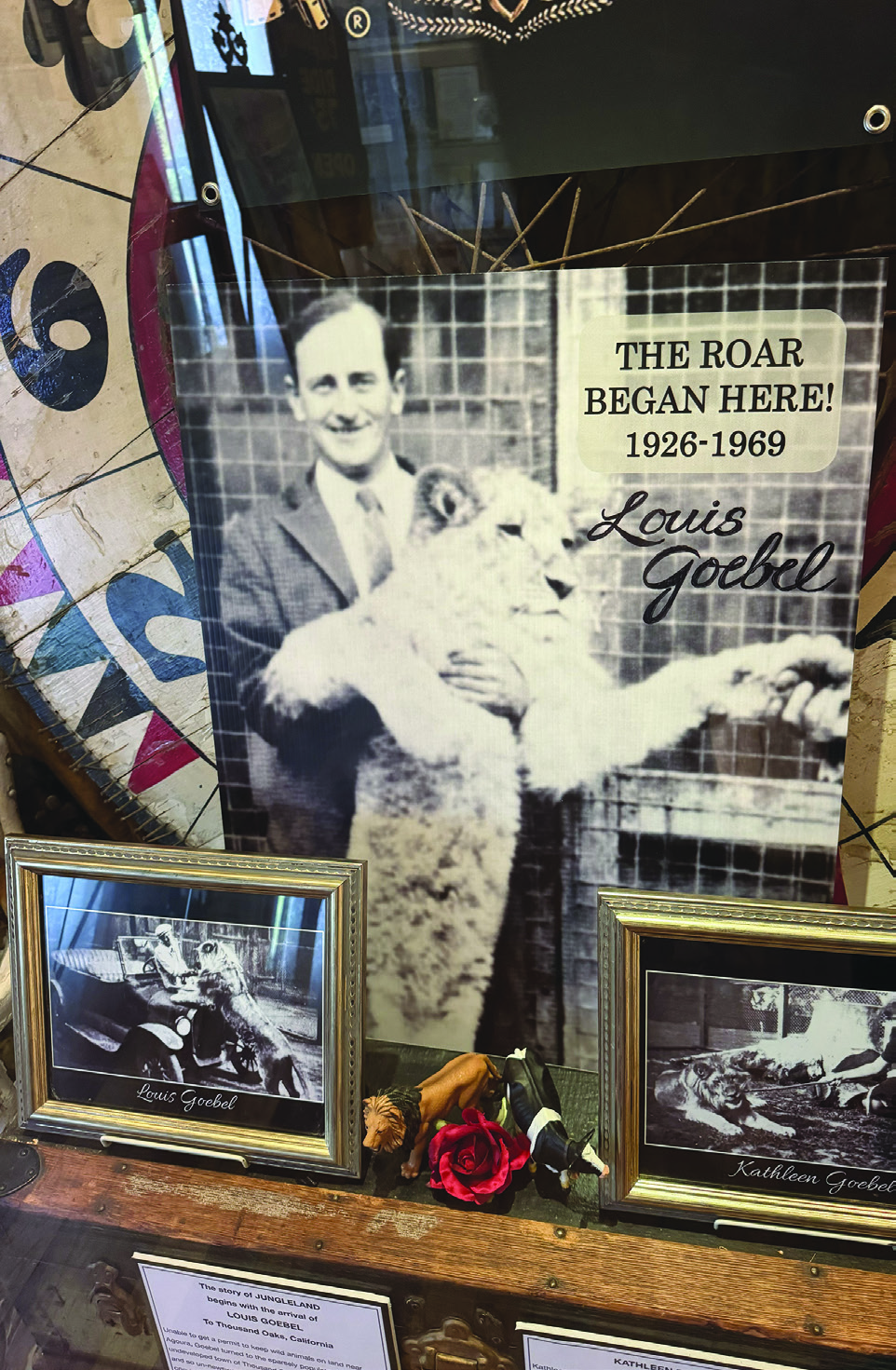
“The first thing I always think of is their little water fountains. All of them had a big head of a lion on it, and you had to put your head inside of the lion to get water. So, there were just all kinds of things that made it so interesting. And most of us knew his animals already from the movies,” Stewart said of the 170-acre training facility founded by Louis Goebel in 1926. Today, that location is now the site of the Thousand Oaks Civic Arts Plaza.
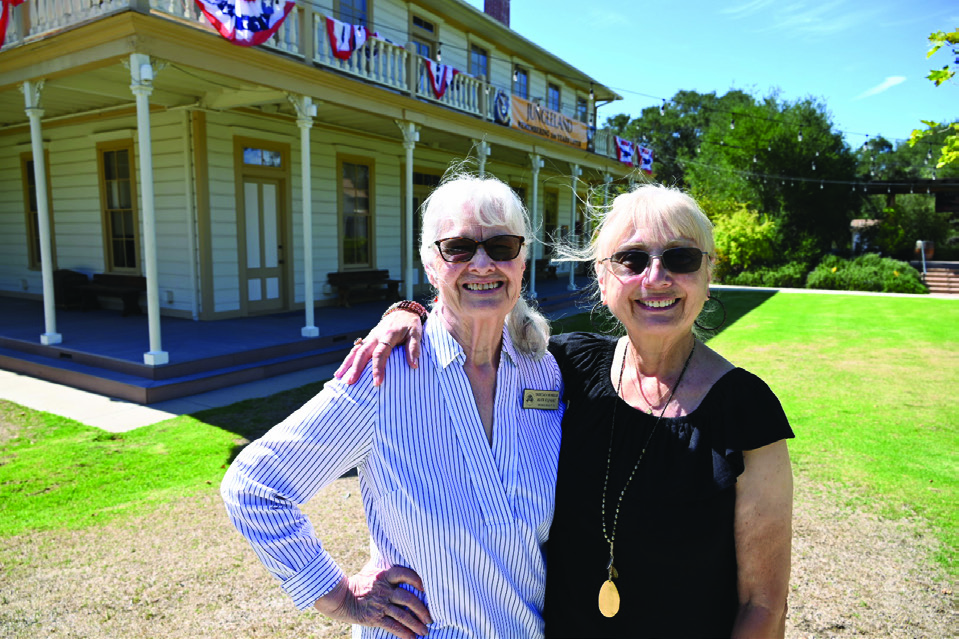
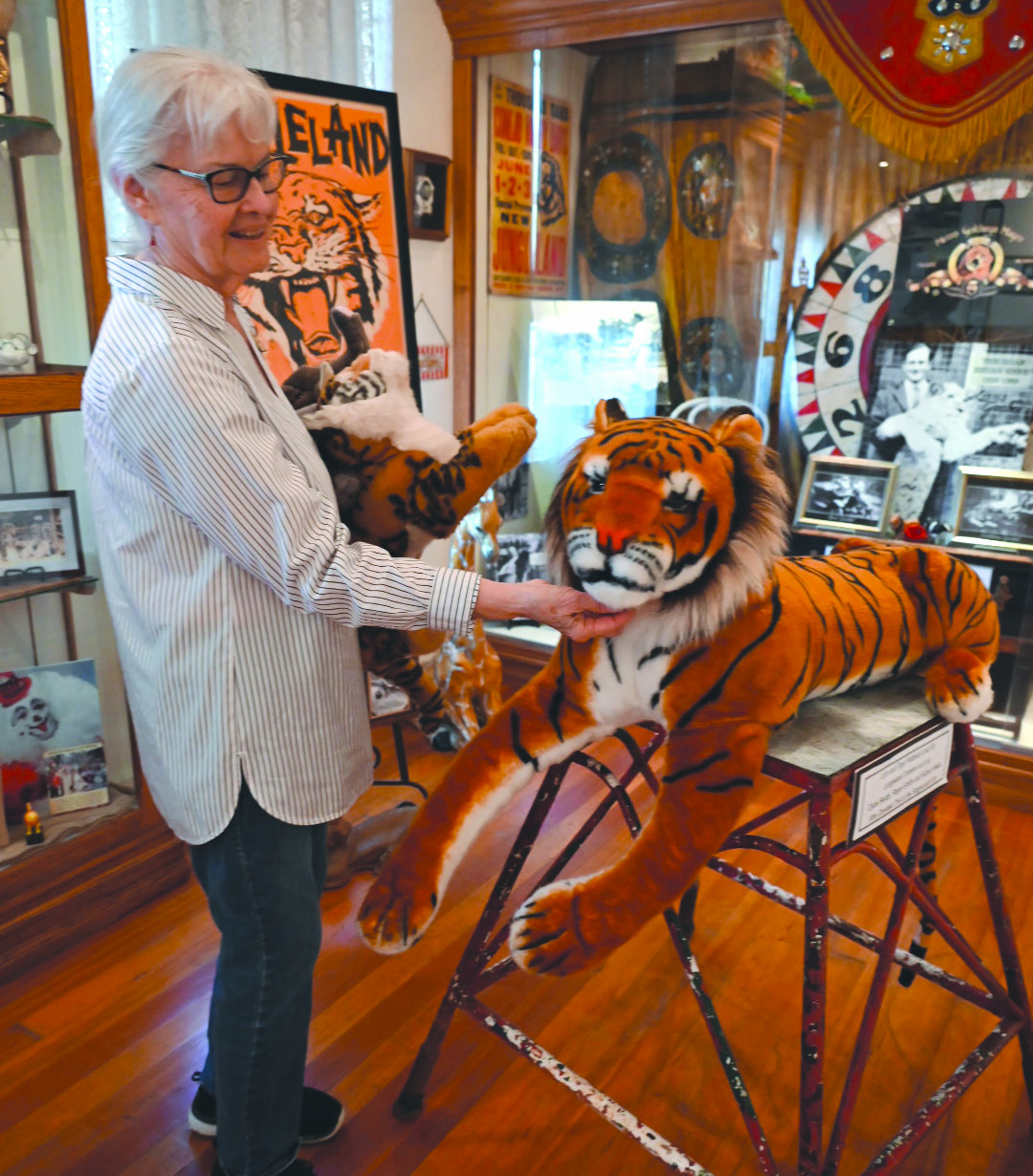
Stewart and her sister, Gloria Morris, who also lives in Newbury Park, serve as docents specializing in Jungleland history at the Stagecoach Inn Museum. The museum in Newbury Park is operated by the nonprofit Conejo Valley Historical Society and features a whole room devoted to exhibits on Jungleland.
At the theme park, guests enjoyed exotic animal shows, rode elephants and tortoises, and viewed animals on a motor tour from an open coach decorated with bamboo and palm leaves. The Stagecoach Inn Museum celebrates the centennial of Jungleland’s creation with an event this weekend: “Jungleland Turns 100—A Roaring Return.”
Fred Nuesca, 89, is a former aerialist from Jungleland and now serves as a docent.
He will share photos and videos during “A Roaring Return.” In addition, a performance by Jana Goldsworth will bring Jungleland’s famed female tiger trainer, Mabel Stark, to life, while local historian Richard Senate will share photos and stories. Other activities will include animal face painting, photo opportunities and a gallery walk. Admission is $10 and $5 for kids up to age 12.
Hollywood comes to Thousand Oaks
Goebel was a butcher’s son from NewYork who moved to California and found work preparing meals for lions at Universal Studios, which maintained the world’s largest privately owned menagerie during the silent film era. Hollywood lore claims that studio zoos were a casualty of the advent of “talkies” in the 1920s, as roaring lions and howling monkeys reportedly caused disruptions for filmmakers shooting scenes with dialogue.
Jungleland was originally known as Goebel’s Lion Farm, home to six lions he purchased from Universal Studios. Other animals followed including hippos, elephants, llamas, orangutans and camels. Some were famous, including Leo, the MGM Lion; Mr. Ed, the talking horse; and Bimbo, the elephant from the popular TV show “Circus Boy.”
Hollywood producers would use Jungleland as a backdrop for other parts of the world, as the Conejo Valley was far less developed then and could stand in for more exotic locales. “The Adventures of Robin Hood,” “Tarzan” and “Doctor Dolittle” are among the famous movies shot at Jungleland.
By the late 1960s, the theme park was having a hard time competing against newer regional attractions such as Disneyland and Knott’s Berry Farm. Busch Gardens in nearby Van Nuys operated from 1966 to 1979, highlighting exotic animal shows, particularly birds, along with a Budweiser beer factory tour. The era of exotic animals in Thousand Oaks thus came to an end with the sale of 1,800 animals at auction in 1969.
Parades of elephants and camels
Stewart, who has become an expert on Jungleland as a museum docent, recalled that Goebel and his wife, Kathleen, were very community minded.
“He was very much like a Walt Disney-type person in that he cared about family, he cared about the community,” Stewart told the Ventura County Reporter during an interview in the Stagecoach Inn Museum’s room devoted to Jungleland that she and her sister helped curate and interpret.
When Goebel first moved to Thousand Oaks, after building cages for animals and a house to live in, he also built a community center on his land.
“Right away, any meetings, any dances, anything like that, was held right on the property,”Stewart said. “He was a good organizer, and he would get a feel for what was needed. So, if they needed a church, if they needed a park, if they needed a hospital, he would help the whole community organize.”
It was not unusual at the time to see parades of elephants and camels marching down streets in Thousand Oaks, helping raise funds for one cause or another.
“He built the first fire station. He did so many community-minded things and brought us all together and kept improving things.
Right now, we still have Goebel Senior Center…he contributed land for that purpose,”Stewart said.
Because Stewart was fortunate enough to move to the Conejo Valley in time to visit Jungleland, she was even able to see world-famous female lion trainer Mabel Stark in person. Stark, a veteran of the Al G. Barnes Circus as well as Ringling Bros. and Barnum & Bailey Circus, ended her career at Jungleland, where she spent more than two decades performing. During the centennial celebration, Stark will be portrayed by Jana Goldsworthy.
“When she turned 50 in 1938, she thought she was retiring. She boarded some of her favorite tigers with Mr. Goebel and bought a house there in Thousand Oaks, wrote a book, ‘Hold That Tiger.’ But then she got bored.
She really missed working with her tigers,” said Stewart. “I was very happy that I got to see her before Jungleland closed.”
Gloria Morris told the VCReporter she and her sister worked to enhance the Jungleland exhibit prior to the centennial, and she enjoyed learning all about Goebel.
“He was a very kind man, very thoughtful about others,” Morris said. “He was a visionary.”
“What I liked about him was that he started with very little. It’s quite a story but it’s a beautiful story. It’s an interesting story,” Morris continued. “It grew into a great corporation because he allowed others to come in and work it. I mean, it started with just a small lion farm where he was readying his animals.”
Giving a dream a chance
“Jungleland Turns 100—A Roaring Return” event coordinator Christa Nonnemaker is a former high school history teacher with degrees from UCLA and Stanford. She told the VCReporter that Jungleland is particularly interesting because it morphed into a multifaceted business which was not only training animals for the studios but helped put Thousand Oaks on the map.
“It drew people to the area and helped to build the area up and bring in a whole new community, essentially. So that’s always fascinating. And how these elephants helped in the community actually to, you know, pull cars off that were blocking the road and things like that,” Nonnemaker said.
She’s hoping people learn from the celebration that Goebel was more than an animal trainer; he was a true visionary.
“Here’s a man with a business idea and he created an entire ecosystem that was instrumental in multiple parts of the economy and society. So, he helped to build not only the Hollywood industry and generate interest as well as income, but he also created a sort of theme park and entertainment center that catered to L.A. and people who want to see things,” she said.
During World War II, people would come to places like Jungleland for a little relief and enjoyment, Nonnemaker said.
“I’m fascinated and I’m impressed by people who are willing to give their dreams a chance, and I think he did. You know, I think they had a tough time at the end, frankly, but nonetheless, he was able to do a lot, it seemed like. I don’t think people really quite realize how much he was able to do in those years. He seemed like an amazing man, Louis Goebel.”
Reflecting community history
Nonnemaker said the Stagecoach Inn Museum, which is open on Wednesdays and Saturdays, 1-4 p.m., is also a great resource in general — which may be easy to miss because the buildings are situated behind large trees and hedges.
The Stagecoach Inn was an actual hotel which was moved to its current site at 51 South Ventu Park Road in the late 1960s, burned down in 1970, and was rebuilt and reopened as a museum in 1976. Costumed volunteer docents lead tours of the two-story building which features balconies and a big basement. There’s also a large lawn serving as a summer concert venue.
“I love it. I think it is one of those undiscovered gems of the Ventura County area.
I wish people knew more about it because it’s sort of hidden because of the foliage and everything. It provides a way for people to see what the past was like in the Conejo Valley,” she said.
In addition to the main building, the museum complex also includes a replica Chumash dwelling, a carriage house with blacksmith shop filled with antique tools, a pioneer cabin and a Spanish adobe. The museum integrates other aspects of the diverse local community into its programming. For example, Nonnemaker said, the museum hosted a Lunar New Year event in January.
“I thought that was wonderful,” she said. “We had the Chinese American dancers come out and all of that kind of thing. We also talk about the different cultures that made up the Conejo Valley even before the Inn. We do the Chumash celebration in October. Children love to come to the Pioneer Jamboree; that’s one of their favorite events of the year. They get to sort of experience what life was like in the West. It’s great.”
“Jungleland Turns 100 — A Roaring Return” takes place on Saturday, Aug. 1, 1-4 p.m. at the Stagecoach Inn Museum, 51 S.Ventu Park Road, Newbury Park. For more information, visit stagecoachinnmuseum.com.